21.7K
Downloads
99
Episodes
Learning from scholars and every day Americans about what religion has done to America and what America has done to religion, helping all of us better comprehend and perpetuate the American experiment in self-government, including what is perhaps its greatest innovation and the essence of the American project: religious freedom as defined by the Constitution’s Article VI and First Amendment religion clauses.
Episodes
Feb 8, 2021
Feb 8, 2021
55 min
Sports is everywhere in America, as we all know: the Super Bowl, the Masters, the World Series, the Stanley Cup, the U.S. Open, the Olympics, the NBA, MLB, NFL, youth travel leagues, high school sports, and the list goes on and on. So maybe if we understand sports better, we can understand America better. For the podcast series “Religion in the American Experience”, we want to learn about the relationship between religion and sports – which it turns out, is a deep and meaningful one.
This discussion will help us better understand what religion has done to America, and what America has done to religion, and we trust that as a result, listeners will see how indispensable the idea of religious freedom as a governing principle, is, to the United States and its ability to fulfill its purposes in the world.
Today to discuss religion and sports we have with us Rebecca Alpert, Professor of Religion at Temple University and author of Religion and Sports: An Introduction and Case Studies, which we will use as the basis of the interview today. Her research interests include religion and sport, religion and sexuality and American Judaism in the twentieth century. She is also the author of Out of Left Field: Jews and Black Baseball and co-editor of Gods, Games, and Globalization: New Perspectives on Religion and Sport, published in 2019. Professor Alpert was among the first women in America ordained as a rabbi.
We encourage listeners to visit storyofamericanreligion.org and sign up for future podcast notifications under the “signup” tab.
I am confident that today’s podcast will help us better understand what religion has done to America, and what America has done to religion, and we trust that as a result, listeners will see how indispensable the idea of religious freedom as a governing principle, is, to the United States and its ability to fulfill its purposes in the world.
Feb 1, 2021
Feb 1, 2021
59 min
The Catholic Church is the United State's second largest religious grouping, after Protestantism, and the country's largest church or religious denomination. As of 2018, 23% of the United States population was Catholic. This is startling when you realize that at the beginning of the American experiment, religions and their adherents were almost completely Protestant and vehemently, sometimes violently, anti-Catholic.
The story of this transformation is critical to understanding the American religious landscape, which is another way of saying it is critical to understanding America. And, often the best way to understand a historical movement or event is to learn about individual actors on history’s stage.
Importantly, as historian Anne Braude of Harvard Divinity School wrote: “Women’s History is American Religious History.” One prominent Catholic in American history is Elizabeth Ann Seton, who began the Sisters of Charity, the first religious community of women founded in the United States, and who was the aunt of Seton Hall University’s founder, Bishop James Roosevelt Bayley.
Today to help us understand the life and times of Elizabeth Ann Seton is Catherine O'Donnell, Professor of History at Arizona State University and author of Elizabeth Seton: American Saint, which was awarded the Distinguished Book Award by the Conference on the History of Women Religious, for books published from 2016-2018, as well as the Biography Prize from the Catholic Press Association. Her primary research interests include Early American history, culture, and religion. She is also the author of Men of Letters in the Early Republic and many articles appearing in venues including the William and Mary Quarterly, the Journal of the Early Republic, Early American Literature, and the US Catholic Historian. She teaches undergraduate and graduate courses on early American history and the Atlantic World.
It is hoped that our time together today will help us better understand what religion has done to America, and what America has done to religion, and we trust that as a result, listeners will come to better understand how revolutionary and indispensable the idea of religious freedom as a governing principle, is, to the United States and its future.
Join us in building The National Museum of American Religion in the nation's capital, to open in 2026, on the 240th anniversary of Thomas Jefferson's immortal words "Almighty God hath created the mind free", by donating at storyofamericanreligion.org/contribute.
Jan 28, 2021
Jan 28, 2021
1hr 1 min
Welcome! The start-up National Museum of American Religion is dedicated to telling the profound story of what religion has done to America and what America has done to religion, convinced that understanding this history will help us all see the revolutionary nature and indispensability of the idea of religious freedom as a governing principle in the United States.
Through the podcast series “Religion in the American Experience” scholars of American history share stories of religion exerting a vast influence, for good and ill, on the imperfect yet noble American experiment in self-government and its people. These are tales all Americans need to hear in order to better understand America and their role in its present & future.
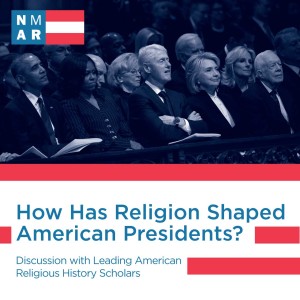
Just two days ago we saw the inauguration of a new president of the United States, and just the second Catholic president in our history.
Knowing that religion is a profound shaper of men and women, Wednesday’s peaceful transfer of power made us think that it would be fascinating, even beneficial to 21st century American progress, to learn more about American presidents and the religions that shaped them.
Our panel this morning consists of (and panelists, please raise your hand when your name is read):
Gary Scott Smith, who before his retirement, chaired the History Department at Grove City College and is the author or editor of eleven books including Faith and the Presidency: From George Washington to George W. Bush and Religion in the Oval Office: The Religious Lives of American Presidents. Smith is also an ordained minister in the PCUSA and served five congregations as an interim or stated supply pastor.
Randall Balmer taught at Barnard College and Columbia University for twenty-seven years before moving to Dartmouth College in 2012, where he was named the Mandel Family Professor in the Arts & Sciences. He is the author of Redeemer: The Life of Jimmy Carter. He is also an Episcopal priest. Balmer was nominated for an Emmy for scriptwriting and hosting the three-part PBS documentary Mine Eyes Have Seen the Glory, an insightful and engaging journey into the world of conservative Christians in America, based on his book with the same title.
Join us building The National Museum of American Religion in the nation's capital, to open in 2026, the 240th anniversary of Thomas Jefferson's immortal words "Almighty God hath created the mind free." Contribute today at www.storyofamericanreligion.org/contribute.
Jan 25, 2021
Jan 25, 2021
1hr 7 min
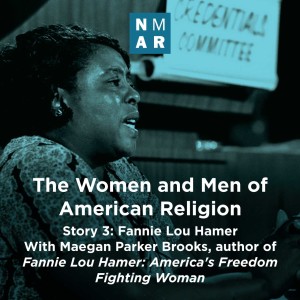
The Civil Rights Movement is important to America and it’s important to Americans at this point in our national history. The story itself and the reception of the story is complex, nuanced, messy, profound, compelling, sad, joyful, hopeful and despairing. The Civil Rights Movement story is inextricably linked to Black slavery, what some call one of America’s two original sins. A good way to better understand any event or movement in history, and what it importantly projects onto the present, is to focus on individual actors on history’s stage. The name Fannie Lou Hamer will most likely not be familiar with most of our listeners – she was one of these larger-than-life actors in the Civil Rights Movement. For the purposes of this podcast series, we want to know about her religious thought motivated and animated her fight for full civil rights for Black Americans.
To do this we have with us Maegan Parker Brooks, associate professor in the School of Civic Communication and Media at Willamette University, and author of several books and other media about the life and times of Fannie Lou Hamer, including Fannie Lou Hamer: America’s Freedom Fighting Woman and the children’s book Planting Seeds: The Life and Legacy of Fannie Lou Hamer. She received her PhD from the University of Wisconsin-Madison in 2009, and is a teacher-scholar working at the intersections of rhetoric, race and public memory.
Today’s episode will help us better understand what religion has done to America, and what America has done to religion, and we trust that as a result, listeners will see how indispensable the idea of religious freedom as a governing principle, is, to the United States and its ability to fulfill its purposes in the world.
We encourage our listeners to visit storyofamericanreligion.org and register for future podcast notifications under the “signup” tab.
Jan 18, 2021
Jan 18, 2021
1hr 13 min
Welcome! I’m your host Chris Stevenson, of The National Museum of American Religion, which is dedicated to telling the profound story of what religion has done to America and what America has done to religion.
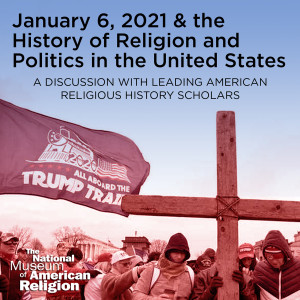
From what I saw on TV as it was happening and what I have read in the newspapers in the days afterwards, “religion” was very present at the storming of the Capitol on January 6, 2021. “Jesus Saves” signs; prayer groups; a large wooden cross on the east plaza; and from an article in the paper the next morning “beneath streaming flags … people loudly exhorted Jesus and chanted ‘USA’!”
We are here this morning to learn the lessons of history, specifically the history of religion and politics in the United States, from a panel of leading American scholars, and offer these lessons to the public so we can all better understand and react to, the violent occupation of the United States Capitol in Washington, D.C.
Our panel consists of (and panelists, please raise your hand when your name is read):
- Marie Griffith, Director of The John C. Danforth Center on Religion and Politics at Washington University in St. Louis
- Jamil Drake, Assistant Professor in the Department of Religion at Florida State University
- Lerone A. Martin, Associate Professor of Religion and Politics, also at the John C. Danforth Center on Religion and Politics
- Hasia Diner, Director, Goldstein-Goren Center for American Jewish History at New York University
- Amy Black, Professor of Political Science at Wheaton College
Go to www.storyofamericanreligion.org/sign-up/ to register for podcast notifications.
Jan 11, 2021
Jan 11, 2021
1hr 5 min
Hello, this is Chris Stevenson, host of the podcast series “Religion in the American Experience.” Due to the events of last week at the United States Capitol in Washington, D.C. we will not publish, as we usually do, our normally scheduled episode on Monday January 18th. Instead, over the next two weeks we will convene a panel of American religious history scholars to discuss how the history of religion and politics can help us better understand and react to the storming of the Capitol on January 6th, 2021. The recording of this discussion will be released Monday January 25th, on Podbean, Apple Podcast and Spotify. I look forward to meeting you then!
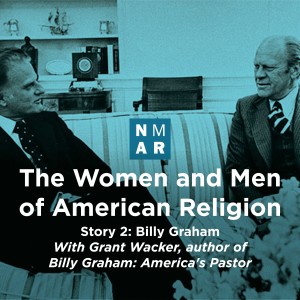
If anyone thinks about religion in America, which thinking is absolutely essential to understand America itself, one of the first things that comes to mind, whether one is religious or not, is “Billy Graham.” And even if not, because of his 20th century (the “American century”) influence, we should think about him. Born in 1918 on a dairy farm in North Carolina, Billy Graham later would be an advisor to American presidents, travel the world including behind the Iron Curtain during the Cold War, and fill stadiums to witness his preaching.
Our discussion about this towering figure on the American historical stage will help us better understand what religion has done to America, and what America has done to religion, and we trust that as a result, listeners will see how indispensable the idea of religious freedom as a governing principle, is, to the United States and its ability to fulfill its purposes in the world.
Today we have with us Grant Wacker, Gilbert T. Rowe Professor Emeritus of Christian History at Duke University, and author of America’s Pastor: Billy Graham and the Shaping of a Nation. He specializes in the history of Evangelicalism, Pentecostalism, World Missions and American Protestant thought. He is the author or co-editor of seven books, including Heaven Below: Early Pentecostals and American Culture (2001, Harvard University Press). He has served as a senior editor of the quarterly journal, Church History: Studies in Christianity and Culture, and is past president of the Society for Pentecostal Studies and of the American Society of Church History, and a trustee of Fuller Theological Seminary.
This episode was recorded on December 8, 2020.
We encourage our listeners to visit storyofamericanreligion.org and register for future podcast notifications under the “signup” tab.
Jan 4, 2021
Jan 4, 2021
48 min
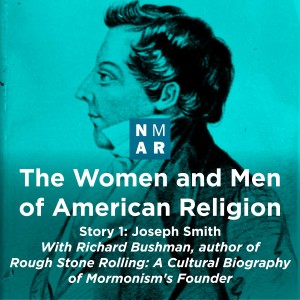
The name Joseph Smith is known to many Americans, as is the faith he founded, once called “Mormonism”, but recently having requested to be identified by their original, historic name: “The Church of Jesus Christ of Latter-day Saints.” Joseph Smith is revered by members of that church as a “modern prophet of God”; and derided by others as a “charlatan” or worse. We thought that to understand American religion, which is really part of the quest to understand America itself, it would be helpful to know, as best we can in an hour, what the historical record has to say about this man.
Today we have with us Richard Bushman, Gouverneur Morris Professor Emeritus of History, United States at Columbia University, to help us understand who Joseph Smith was by discussing his book Joseph Smith: Rough Stone Rolling, A Cultural Biography of Mormonism’s Founder. Mr. Bushman specializes in the social and cultural history of the United States and received his PhD from Harvard University. He is the author of several other books, including From Puritan to Yankee: Character and the Social Order in Connecticut, 1690-1765, King and People in Provincial Massachusetts, and The Refinement of America: Persons, Houses, Cities.
We encourage listeners to visit storyofamericanreligion.org and resister for future podcast notifications under the “sign-up” tab.
Dec 31, 2020
Dec 31, 2020
1hr 2 min
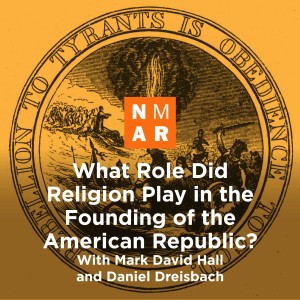
The interest in religion and the founding of the United States is broad, deep, intense and continuous. And this interest is had by those who are themselves religious and those who are not.
Today we have with us two scholars who have expertise in this area, Mark David Hall and Daniel Dreisbach, to help us understand what we know about this from the historical record and what we don’t.
Daniel Dreisbach is professor in the Department of Justice, Law and Criminology at American University in Washington, D.C., with primary research interests in American constitutional law and history, First Amendment law, church-state relations, and criminal procedure. He received his J.D. from the University of Virginia and his PhD from Oxford University. Dr. Dreisbach is the author, editor, or co-editor of a dozen books on religion in America, including his recently published Reading the Bible with the Founding Fathers.
Mark David Hall is the Herbert Hoover Distinguished professor of politics at George Fox University in Oregon, with primary research interests in American political theory and the relationship between religion and politics. He received his PhD from the University of Virginia. Dr. Hall is the author, editor, or co-editor of a dozen books on religion in America, including most recently Did America Have a Christian Founding?
We encourage listeners to visit storyofamericanreligion.org and sign up for future podcast notifications under the “Sign Up” tab.
Dec 28, 2020
Dec 28, 2020
53 min
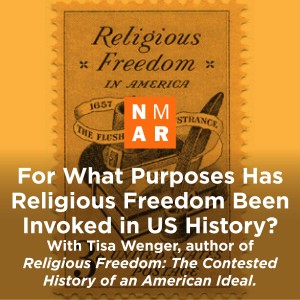
“Religious freedom” is everywhere in the news: it is invoked, it is debated, it is implicated, it is litigated, it is ridiculed, it is derided, it is loved, it is honored, it is before the Supreme Court & school boards, and it is found in religious sermons. The National Museum of American Religion offers to shed light on its history, in the hope that Americans, knowing some of its history, will understand this governing principle better, how revolutionary it is, how fragile it is, how dynamic it is, and how indispensable it is to America in fulfilling her purposes in the world, and so commit to protect and preserve it.
Today we have with us Tisa Wenger, associate professor of American religious history at Yale Divinity School, to show us some of this history of religious freedom by discussing her book Religious Freedom: A Contested History of an American Ideal. Professor Wenger’s research and teaching interests include religious encounters in the nineteenth- and twentieth-century United States; the cultural politics of religious freedom; and the intersections of race, religion and empire in American history. She is also the author of We Have a Religion: The 1920s Pueblo Indian Dance Controversy and American Religious Freedom.
Sign up for notifications of future podcasts: www.storyofamericanreligion.org/sign-up/
Dec 21, 2020
Dec 21, 2020
56 min
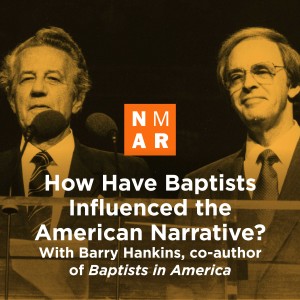
When one thinks of what religion has done to America, at least for me and I think for many of our listeners, “Baptists” come to mind – they are influential, they are large in number, and their history is very much linked to American history. If one wants to understand America, one needs to understand America’s religious history – and if one needs to understand America’s religious history, one must understand Baptist history.
We have with us today Barry Hankins, Professor of History and Department Chair at Baylor University, who will walk us through some of the more important parts of Baptist history in the United States (focusing on post Civil War up to the present) using the fantastic book Baptists in America, written by Professor Hankins and his Baylor colleague, Professor Thomas Kidd. Dr. Hankins’ research interests include religion and American culture, Protestant Fundamentalism and EvanGELicalism, and church and state in American history. He received his PhD from Kansas State University in 1990, and is the author of several books including Woodrow Wilson: Ruling Elder, Spiritual President, Jesus and Gin: Evangelicals, the Roaring Twenties, and Today’s Culture Wars, and God’s Rascal: J. Frank Norris and the Beginnings of Southern Fundamentalism.
Also, as with each episode in our podcast series “Religion in the American Experience”, we trust that listeners will come away with a better comprehension of what religion has done to America and what America has done to religion, and thus come to value the necessity of this idea of religious freedom as a governing principle to America fulfilling her purposes in the world.
Got to www.storyofamericanreligion/sign-up/ to register for notifications of all future podcasts!